

rope clamps
Useful information about rope clamps
What are rope clamps and what are they used for?
Rope clamps grip a load-bearing rope in one direction of movement, enabling controlled ascent, position holding or the creation of a progress-capture system. They are used particularly in rope access, rescue operations, arboriculture and work on masts or towers.
The SKYLOTEC range of rope clamps extends from compact chest ascenders and ergonomic handled ascenders to foot ascenders and multifunctional devices with an integrated pulley. The suitable design depends on whether the device is required for ascending, as a progress-capture mechanism, for a hauling system or within a rescue system.
What are the differences between handled, chest and foot ascenders?
Handled ascenders are pushed upwards along the rope by hand and provide an ergonomic grip for ascending. When used with a foot loop, the user can raise their body weight using their legs and then move the rope clamp further upwards. Models for the left or right hand make it easier to coordinate the device with the respective ascent system.
Chest ascenders are positioned close to the body on the harness system and move automatically upwards along the rope during ascent. They keep the upper body closer to the rope and support an efficient, upright movement sequence. Foot ascenders, by contrast, are attached to the footwear and allow the rope to be fed downwards directly through leg movement. In a coordinated system, handled, chest and foot ascenders complement one another to provide a particularly energy-efficient rope ascent.
What advantages do chest ascenders offer when ascending a rope?
Chest ascenders such as the CHEST ASCENDER HC, the CHEST ASCENDER+ or the ASCENDER SIMPLE are positioned close to the body and support a smooth, vertical ascent. Their body-close position keeps the rope clamp stably aligned during ascent and allows it to follow the rope automatically after every step.
The ASCENDER SIMPLE can also be used as a progress-capture device and operated with one hand. The CHEST ASCENDER+ is designed for use with the QUICK'UP+, while the CHEST ASCENDER HC features a hard, wear-resistant anodised finish designed for intensive use. The selection should therefore depend on whether low weight, system compatibility, wear protection or an additional progress-capture function is the main priority.
When are handled ascenders the right choice?
Handled ascenders are suitable for users who need to move upwards along a rope in a controlled manner while maintaining a secure, ergonomic grip. The rope clamp is pushed upwards along the rope, locks when loaded and, together with a foot loop, provides a load-bearing point for the next step of the ascent.
With the QUICK'UP+ L and QUICK'UP+ R, SKYLOTEC offers separate versions for the left and right hand. The GET UP, by contrast, can be used with either hand and features two karabiner attachment points. This allows it to be integrated flexibly into different ascent and safety configurations.
What advantages do foot ascenders offer for rope ascent and tree climbing?
Foot ascenders make use of the stronger leg muscles and therefore support a more energy-efficient ascent. During the upward movement, the rope runs through the clamp and is held securely when loaded. This means the rope does not have to be fed manually after every step.
The QUICK STEP-A L and QUICK STEP-A R models are designed for the left and right foot respectively and feature a self-cleaning cam. For arboriculture, the removable QUICK TREE L and QUICK TREE R foot ascenders are available. They can be attached to different types of footwear using the QT UNIVERSAL or to climbing spurs using the QT SPURS.
What advantages do rope clamps with an integrated pulley offer?
An integrated pulley adds further rope-redirection options to the rope clamp and supports the construction of efficient hauling systems. Depending on the configuration, the same device can therefore be used for ascending, retrieving equipment or as part of a rescue system.
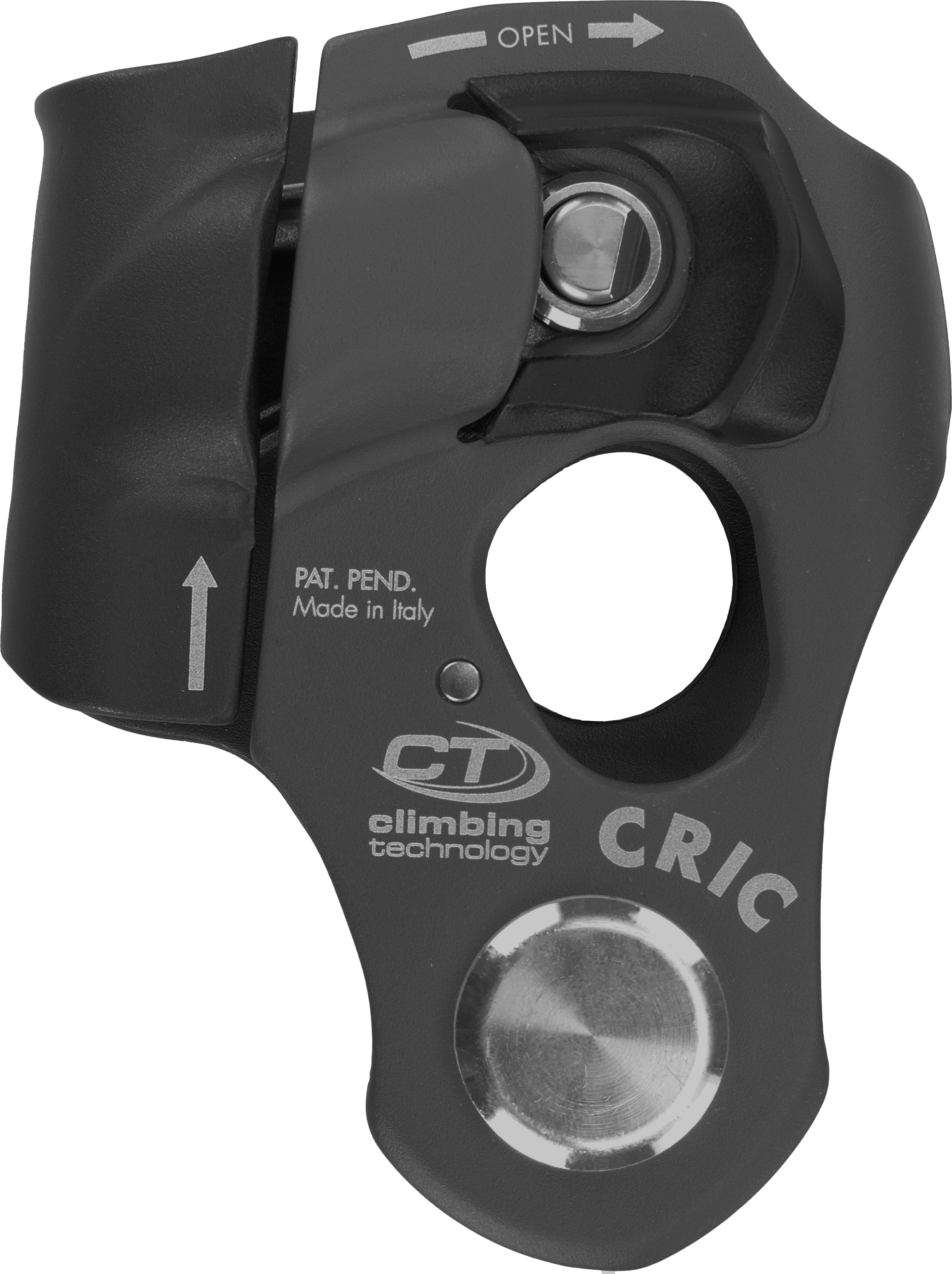
The QUICK ROLL L and QUICK ROLL R handled ascenders combine an ascender handle with an integrated pulley. The compact multifunctional CRIC combines an ascender, pulley, rope clamp with pulley and progress-capture function. This may reduce the number of individual components required and minimise system changes during use.
When can a rope clamp be used as a progress-capture device?
When used as a progress-capture device, a rope clamp holds the rope that has already been pulled through and prevents a raised load from running back between two pulling movements. This function is used in hauling systems, recovery systems and assisted rescue operations, among other applications.
Not every ascender is automatically suitable for every progress-capture application. The manufacturer’s approval, rope diameter, load direction and intended system are decisive. Products such as the ASCENDER SIMPLE or CRIC are expressly designed to provide corresponding progress-capture functions. Nevertheless, the complete configuration must be planned as a system and combined with suitable pulleys, karabiners and anchor points.
Which rope clamps are suitable for rescue and hauling systems?
Rescue applications often require compact rope clamps that can be positioned quickly on the rope and integrated into hauling or retrieval systems. In addition to reliable clamping performance, low weight, intuitive operation and compatibility with the ropes being used are decisive.
The Rope Grap SCEND is designed for kernmantle ropes with diameters from 10.5 to 13 millimetres and is approved for MILAN rescue kits. The CRIC and CRIC + OVX TG combine several functions for ascending, redirection, rope clamping and retrieval. In complex rescue systems, such multifunctional devices can simplify the configuration, provided they are approved for the specific rescue procedure.
What role do rope diameter and rope condition play when using rope clamps?
A rope clamp may only be used with ropes whose diameter and construction are approved for the respective device. If the rope is too thin, the clamping effect may be insufficient. A rope that is too thick, by contrast, can impair guidance, opening or secure insertion.
The condition of the rope also affects performance. Dirty, icy, heavily worn or damaged ropes can change the running and clamping behaviour. Although self-cleaning cams support operation in contaminated conditions, they do not replace inspection of the rope and device. The rope clamp and rope must therefore be checked together before every use.
Do toothed rope clamps damage the rope?
Toothed cams are designed to grip the rope securely under load. When used as intended with a compatible rope, they provide a defined clamping effect. Incorrect loading, fall loads, unsuitable rope diameters or repeated slipping of the clamp can, however, place excessive strain on the rope.
The rope should therefore be inspected regularly for sheath wear, crushing and damage. The teeth, spring and moving parts of the rope clamp must also remain clean and fully functional. A rope clamp is not a substitute for a fall arrest device unless it is expressly certified and approved for that function.
Which standards apply to professional rope clamps?
EN 567 is particularly relevant for rope clamps used for ascending. Devices for rope access systems may also comply with EN 12841 Type B. Depending on the additional function and application, further standards may apply, such as EN 353-2 for guided-type fall arresters on a flexible anchor line.
A multifunctional device with a pulley or progress-capture function may have different approvals from a conventional handled ascender. The standard, rope range and application approval must therefore always be checked for the specific product. All system components must be compatible and used in accordance with the manufacturer’s instructions.
How do you choose the right rope clamp for the application?
An ergonomic rope ascent often uses a combination of handled, chest and foot ascenders. A handled ascender provides a secure grip, the chest ascender keeps the body close to the rope and a foot ascender makes use of leg strength. Devices with a progress-capture mechanism or integrated pulley can offer advantages for hauling or rescue systems.
Before making a selection, the hand side, rope diameter, intended function, standard and compatibility with the harness, karabiners and pulleys must be checked. SKYLOTEC offers specialised rope clamps for rope access, arboriculture, rescue and professional work at height. The decisive factor is not the maximum number of functions, but the correct function for the planned system configuration.




Useful information about rope clamps
What are rope clamps and what are they used for?
Rope clamps grip a load-bearing rope in one direction of movement, enabling controlled ascent, position holding or the creation of a progress-capture system. They are used particularly in rope access, rescue operations, arboriculture and work on masts or towers.
The SKYLOTEC range of rope clamps extends from compact chest ascenders and ergonomic handled ascenders to foot ascenders and multifunctional devices with an integrated pulley. The suitable design depends on whether the device is required for ascending, as a progress-capture mechanism, for a hauling system or within a rescue system.
What are the differences between handled, chest and foot ascenders?
Handled ascenders are pushed upwards along the rope by hand and provide an ergonomic grip for ascending. When used with a foot loop, the user can raise their body weight using their legs and then move the rope clamp further upwards. Models for the left or right hand make it easier to coordinate the device with the respective ascent system.
Chest ascenders are positioned close to the body on the harness system and move automatically upwards along the rope during ascent. They keep the upper body closer to the rope and support an efficient, upright movement sequence. Foot ascenders, by contrast, are attached to the footwear and allow the rope to be fed downwards directly through leg movement. In a coordinated system, handled, chest and foot ascenders complement one another to provide a particularly energy-efficient rope ascent.
What advantages do chest ascenders offer when ascending a rope?
Chest ascenders such as the CHEST ASCENDER HC, the CHEST ASCENDER+ or the ASCENDER SIMPLE are positioned close to the body and support a smooth, vertical ascent. Their body-close position keeps the rope clamp stably aligned during ascent and allows it to follow the rope automatically after every step.
The ASCENDER SIMPLE can also be used as a progress-capture device and operated with one hand. The CHEST ASCENDER+ is designed for use with the QUICK'UP+, while the CHEST ASCENDER HC features a hard, wear-resistant anodised finish designed for intensive use. The selection should therefore depend on whether low weight, system compatibility, wear protection or an additional progress-capture function is the main priority.
When are handled ascenders the right choice?
Handled ascenders are suitable for users who need to move upwards along a rope in a controlled manner while maintaining a secure, ergonomic grip. The rope clamp is pushed upwards along the rope, locks when loaded and, together with a foot loop, provides a load-bearing point for the next step of the ascent.
With the QUICK'UP+ L and QUICK'UP+ R, SKYLOTEC offers separate versions for the left and right hand. The GET UP, by contrast, can be used with either hand and features two karabiner attachment points. This allows it to be integrated flexibly into different ascent and safety configurations.
What advantages do foot ascenders offer for rope ascent and tree climbing?
Foot ascenders make use of the stronger leg muscles and therefore support a more energy-efficient ascent. During the upward movement, the rope runs through the clamp and is held securely when loaded. This means the rope does not have to be fed manually after every step.
The QUICK STEP-A L and QUICK STEP-A R models are designed for the left and right foot respectively and feature a self-cleaning cam. For arboriculture, the removable QUICK TREE L and QUICK TREE R foot ascenders are available. They can be attached to different types of footwear using the QT UNIVERSAL or to climbing spurs using the QT SPURS.
What advantages do rope clamps with an integrated pulley offer?
An integrated pulley adds further rope-redirection options to the rope clamp and supports the construction of efficient hauling systems. Depending on the configuration, the same device can therefore be used for ascending, retrieving equipment or as part of a rescue system.
The QUICK ROLL L and QUICK ROLL R handled ascenders combine an ascender handle with an integrated pulley. The compact multifunctional CRIC combines an ascender, pulley, rope clamp with pulley and progress-capture function. This may reduce the number of individual components required and minimise system changes during use.
When can a rope clamp be used as a progress-capture device?
When used as a progress-capture device, a rope clamp holds the rope that has already been pulled through and prevents a raised load from running back between two pulling movements. This function is used in hauling systems, recovery systems and assisted rescue operations, among other applications.
Not every ascender is automatically suitable for every progress-capture application. The manufacturer’s approval, rope diameter, load direction and intended system are decisive. Products such as the ASCENDER SIMPLE or CRIC are expressly designed to provide corresponding progress-capture functions. Nevertheless, the complete configuration must be planned as a system and combined with suitable pulleys, karabiners and anchor points.
Which rope clamps are suitable for rescue and hauling systems?
Rescue applications often require compact rope clamps that can be positioned quickly on the rope and integrated into hauling or retrieval systems. In addition to reliable clamping performance, low weight, intuitive operation and compatibility with the ropes being used are decisive.
The Rope Grap SCEND is designed for kernmantle ropes with diameters from 10.5 to 13 millimetres and is approved for MILAN rescue kits. The CRIC and CRIC + OVX TG combine several functions for ascending, redirection, rope clamping and retrieval. In complex rescue systems, such multifunctional devices can simplify the configuration, provided they are approved for the specific rescue procedure.
What role do rope diameter and rope condition play when using rope clamps?
A rope clamp may only be used with ropes whose diameter and construction are approved for the respective device. If the rope is too thin, the clamping effect may be insufficient. A rope that is too thick, by contrast, can impair guidance, opening or secure insertion.
The condition of the rope also affects performance. Dirty, icy, heavily worn or damaged ropes can change the running and clamping behaviour. Although self-cleaning cams support operation in contaminated conditions, they do not replace inspection of the rope and device. The rope clamp and rope must therefore be checked together before every use.
Do toothed rope clamps damage the rope?
Toothed cams are designed to grip the rope securely under load. When used as intended with a compatible rope, they provide a defined clamping effect. Incorrect loading, fall loads, unsuitable rope diameters or repeated slipping of the clamp can, however, place excessive strain on the rope.
The rope should therefore be inspected regularly for sheath wear, crushing and damage. The teeth, spring and moving parts of the rope clamp must also remain clean and fully functional. A rope clamp is not a substitute for a fall arrest device unless it is expressly certified and approved for that function.
Which standards apply to professional rope clamps?
EN 567 is particularly relevant for rope clamps used for ascending. Devices for rope access systems may also comply with EN 12841 Type B. Depending on the additional function and application, further standards may apply, such as EN 353-2 for guided-type fall arresters on a flexible anchor line.
A multifunctional device with a pulley or progress-capture function may have different approvals from a conventional handled ascender. The standard, rope range and application approval must therefore always be checked for the specific product. All system components must be compatible and used in accordance with the manufacturer’s instructions.
How do you choose the right rope clamp for the application?
An ergonomic rope ascent often uses a combination of handled, chest and foot ascenders. A handled ascender provides a secure grip, the chest ascender keeps the body close to the rope and a foot ascender makes use of leg strength. Devices with a progress-capture mechanism or integrated pulley can offer advantages for hauling or rescue systems.
Before making a selection, the hand side, rope diameter, intended function, standard and compatibility with the harness, karabiners and pulleys must be checked. SKYLOTEC offers specialised rope clamps for rope access, arboriculture, rescue and professional work at height. The decisive factor is not the maximum number of functions, but the correct function for the planned system configuration.